
New to private label? Download our free 20-page guide to launching your first product.
The main supplement packaging options for private label brands are bottles, jars, stand-up pouches, stick packs, dropper bottles and blister or boxed formats. Pick the one that protects your formula from moisture, air and light, fits your label, and suits your first-run budget. Stock containers with a printed label are the fastest and cheapest way to launch.
Packaging is often the last thing founders think about and the first thing customers see. It also affects shelf life, shipping cost and how fast you can launch. This guide compares the common supplement packaging formats, the rules your label must meet, and the trade-offs between stock and custom packaging.
6 common supplement packaging formats
| Format | Best for | Watch out for |
|---|---|---|
| Plastic bottles | Capsules, tablets, softgels, gummies | Moisture-sensitive products may need a desiccant |
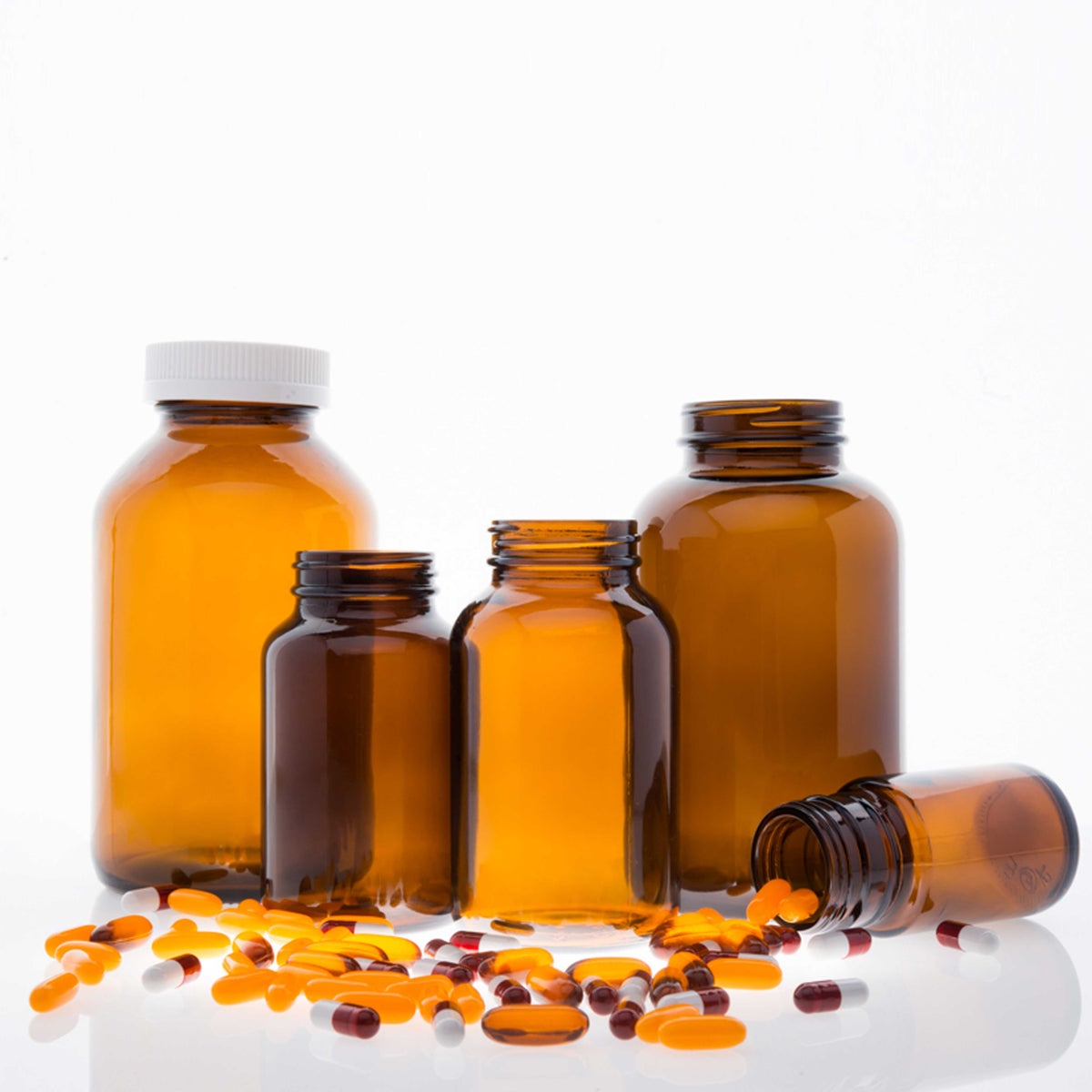
| Glass bottles (often amber) | Light-sensitive capsules, oils | Weight, breakage and shipping cost |
| Jars | Powders, gummies, creams | Wide openings let in more air and moisture each use |
| Stand-up pouches | Powders, soft chews, refills | Need a good barrier film and reliable zipper |
| Stick packs and sachets | Single-serve powders, travel packs | Filling setup and per-unit cost |
| Dropper bottles | Liquid drops and tinctures | Dose accuracy and dropper fit |
Each format changes protection, cost and the customer’s experience. For example, our startup ranges list jar, pouch or stick pack options for collagen powder. The right choice depends on how your customer uses the product, not just how it looks on a shelf.
Supplement packaging protects the formula
Good supplement packaging is part of the formula, not just a container. Three things usually decide the choice:
- Moisture. Powders clump and gummies sweat or harden when humidity gets in. Barrier pouches, well-sealed bottles and desiccants help.
- Air. Oils and some vitamins degrade with oxygen. A smaller opening or single-serve pack limits exposure.
- Light. Some ingredients are light-sensitive. Amber or opaque containers protect them better than clear ones.
Our formulation team designs stability features such as moisture control and light protection alongside the packaging. Prototypes also go through a packaging compatibility check. That matters, because changing the container later can change the shelf life. Health Canada’s GMP guide says companies should re-evaluate shelf life after significant changes, including changes to the packaging. Our guide to stability testing explains why.
Labelling rules your supplement packaging must fit
Your packaging has to hold all the required label text at a size people can read. So choose the container and the label together.
Canada. Natural health products need certain label information in both English and French. Ingested NHPs for human use also need security (tamper-evident) packaging. Under Health Canada’s newer labelling rules, applicable products must show a Product Facts table on the outermost label, and all NHPs have until June 22, 2028, to comply. The legal text sits in the Natural Health Products Regulations, and Health Canada’s labelling guidance explains how to apply it. A small bottle without an outer box has less room, so plan the layout early.
United States. Dietary supplements need a Supplement Facts panel and other required label elements under FDA rules. Child-resistant packaging also applies in some cases. For example, US rules require it for dietary supplements with 250 mg or more of elemental iron in a single package, above set concentrations, under 16 CFR 1700.14.
If you sell in both countries, ask whether one container can carry both labels or whether you need two versions. If you sell on Amazon, our post on preparing a supplement label for Amazon FBA covers the extra barcode and labelling rules.
Stock vs custom supplement packaging
Stock packaging means standard bottles, jars or pouches with your printed label. It’s fast and keeps the first run flexible. It also works well with low minimums, since our private label runs start at 100 units.
Custom packaging means printed pouches, custom boxes or unique bottle shapes. It looks more premium, but it adds cost and time. Packaging suppliers often set their own minimums, and their production queue adds to yours. As a guide, our published ranges put a stock formula in basic packaging at about 4 to 8 weeks. A custom formula with custom packaging takes about 16 to 24 weeks.
A common path is to launch in stock supplement packaging, prove demand, then move to custom packaging on a reorder. Accepting standard packaging can also help when you negotiate minimums.
How supplement packaging affects cost
Packaging is often one of the larger parts of your unit cost. These choices move the number most:
- Material. Glass costs more than plastic and adds shipping weight.
- Printing. A printed label on a stock container usually costs less than a fully printed pouch or box.
- Count size. A 30-count and a 90-count bottle of the same formula are two SKUs, each with its own label.
- Secondary packaging. An outer box adds cost but gives you more label space.
- Shared parts. Pack sizes that share the same pouch or label layout make small runs easier to combine.
Also think about where the product ships. Amazon and 3PL warehouses may have their own packing rules, so check them before you order containers. Finally, test the packaging before a full launch. Order a few filled samples, ship them to yourself, and check that seals hold and labels stay readable. A problem found at this stage costs far less than one found after a full run.
How Welsdom helps with supplement packaging
We offer packaging consultation and can connect you with trusted design partners. We also make sure the formula works with the packaging you choose. Welsdom produces capsules, tablets, powders and gummies under your brand, so we can suggest containers that fit each format.
Our broader post on custom packaging for wellness brands covers branding and sustainability choices in more depth.
Frequently Asked Questions
What is the best supplement packaging for capsules?
Bottles are the usual choice for capsules and tablets. Use amber or opaque bottles for light-sensitive ingredients, and add a desiccant if the formula is sensitive to moisture.
Are pouches good for supplement powders?
Yes, if the pouch has a good barrier film and a reliable zipper. Pouches ship light and suit refills. Jars feel more premium, but each opening lets in more air and moisture.
Do supplements in Canada need tamper-evident packaging?
Yes, for natural health products for human use that are ingested. Health Canada also requires certain label information in both English and French.
Can I change my supplement packaging later?
Yes. Many brands start in stock packaging and switch to custom packaging on a reorder. However, a new container can change shelf life, so check whether you need new stability data.
Does custom packaging take longer?
Usually, yes. Custom-printed packaging has its own supplier queue and minimums. Our ranges put a custom formula with custom packaging at about 16 to 24 weeks, compared with 4 to 8 weeks for a stock formula in basic packaging.
When you’re ready to choose the right container for your formula, get a quote on our private label supplements page.