
New to private label? Download our free 20-page guide to launching your first product.
Soft chew manufacturing turns a powder formula into a dosed, chewable piece in six steps. The team weighs and mixes the dry ingredients, adds oils and binders to form a dough, shapes it into pieces of a set weight, then dries or cures them to a target moisture. Each lot is then tested and packed in moisture-resistant packaging.
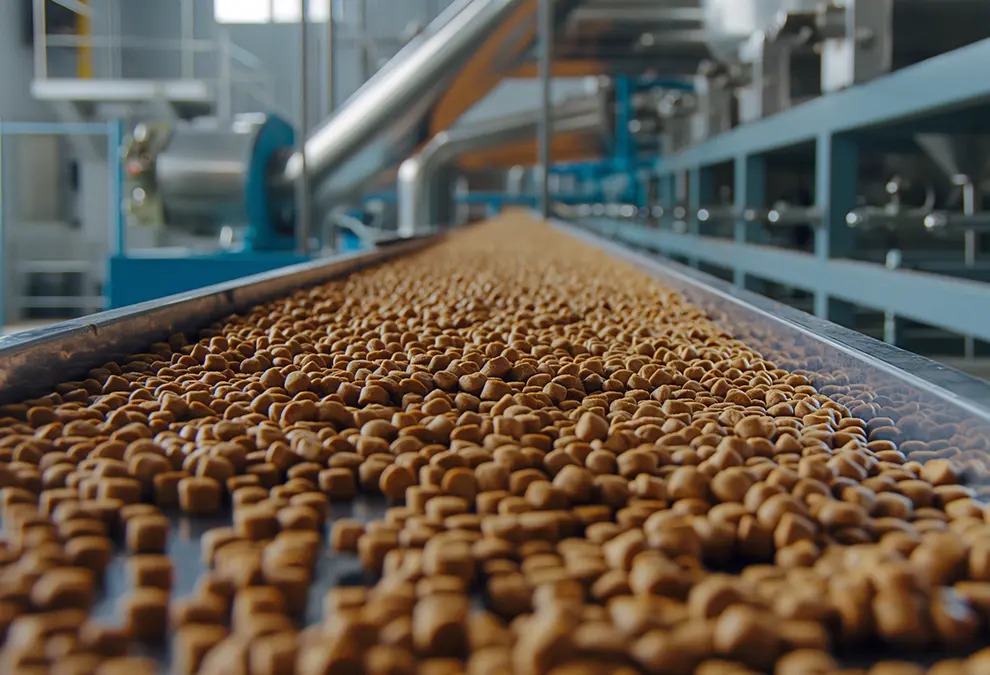
Key takeaways
- In a soft chew, the dose rides on weight: if every piece weighs the same and the blend is even, every chew carries the same dose.
- Moisture is the main quality risk. FDA’s water activity guide says most foods above a water activity of 0.95 can support bacteria, yeasts and mould.
- In Canada, makers of veterinary health products must follow the good manufacturing practices in Part 3 of the Natural Health Products Regulations.
- At Welsdom, pet supplement runs start from 100 units, with typical timelines of 4 to 8 weeks from approved sample to finished stock.
Soft chews are the format most pet owners reach for, because dogs and many cats take them like a snack. For a brand, though, soft chew manufacturing is the trickiest pet format to get right. The chew has to taste good, hold its shape, carry an accurate dose and stay fresh in a pouch for months. This guide walks through soft chew manufacturing step by step, so you know what to ask your manufacturer.
Soft chew manufacturing in 6 steps
| Step | What happens | What can go wrong |
|---|---|---|
| 1. Weigh and verify | Staff check raw materials against specs and weigh each batch | Wrong or out-of-spec ingredient |
| 2. Dry blend | A mixer blends actives, base and flavour evenly | Uneven blend, so doses vary between chews |
| 3. Wet mix | Oils, glycerin and binders form a dough | Dough too wet to hold shape, or too dry to form |
| 4. Form | The line presses, moulds or extrudes dough into pieces | Piece weight drifts, so doses drift |
| 5. Dry or cure | Pieces rest to reach target moisture | Too soft and they spoil, too hard and pets refuse them |
| 6. Test and pack | QA tests the lot; the line packs, labels and codes it | Moisture gets in through a weak pouch |
The table hides a lot of judgment. For example, a heat-sensitive active may need a cold-forming process instead of one that uses heat. A strong-tasting active may need more flavour, which takes up room in the chew. So in soft chew manufacturing, the formula and the process develop together.
Step 1 and 2: weighing and blending
Every soft chew manufacturing run starts with raw materials checked against their specifications. Then the team weighs each ingredient for the batch size. Actives often make up a small part of the chew, while the base, such as flours, proteins or fibres, makes up most of it.
In soft chew manufacturing, blending is where dose accuracy begins. If the active isn’t spread evenly through the base, some chews carry more and some carry less. Small amounts of potent actives are often pre-mixed with part of the base first, then added to the main blend.
Step 3 and 4: making the dough and forming the chews
Next, the liquids go in. Oils, glycerin and other binders turn the powder into a soft dough. The balance matters: too much liquid and the chew slumps, too little and it crumbles or won’t form.
Then the line forms the dough into pieces. Depending on the line, that can mean pressing into moulds, cutting from an extruded rope or stamping shapes such as bones or paws. Piece weight is the number to watch. Because the dose rides on weight, a chew that runs 10% heavy carries about 10% more active. Good lines check piece weights throughout the run.
Step 5: drying, curing and water activity
After forming, the chews rest to reach their target texture and moisture. This step of soft chew manufacturing decides shelf life more than any other. Manufacturers often track water activity, which measures the water available for microbes rather than total water.
FDA’s inspection guide on water activity in foods says most foods above a water activity of 0.95 have enough moisture to support bacteria, yeasts and mould. It gives 0.85 as a key regulatory cut-off for some canned foods. A soft chew has to stay soft enough to chew while sitting well below the range where microbes thrive. Getting that balance right is the core skill in soft chew manufacturing.
Step 6: testing, packing and lot coding
The lab tests each lot before release. Typical checks include the active content, microbial counts and moisture or water activity. Then the chews go into packaging that keeps moisture in check, such as a barrier pouch with a good zipper or a sealed tub.
In Canada, most pet soft chews with a set dose are veterinary health products. Health Canada’s veterinary health products page says companies that make, package, label or store them must follow Part 3 of the Natural Health Products Regulations. In the US, FDA’s preventive controls rule for animal food requires covered facilities to follow good manufacturing practices and keep a food safety plan with a hazard analysis.
Costly soft chew manufacturing mistakes
- Choosing the dose before the chew size. A high dose can force a chew too big for small dogs. Plan dose per chew around the size you want to sell, then scale the serving by body weight.
- Ignoring taste. A chew pets refuse is a returned chew. Test palatability with real pets before you scale.
- Skimping on packaging. A soft chew can pick up moisture in a weak pouch. Spend on the barrier film.
- Skipping stability data. Texture, taste and active content can all change over time. Ask how the manufacturer set the shelf life.
- Using disease claims. A label that promises to treat a condition moves the product out of the low-risk categories in both countries.
Soft chew manufacturing questions to ask your supplier
- Which forming method do you use, and does it involve heat?
- How do you check piece weight during the run?
- What water activity or moisture target do you set, and how do you test it?
- Which tests run on each finished lot?
- What packaging do you recommend, and is there stability data in it?
- What is the smallest first run for this format?
Our own answer to question 6: pet supplement runs at Welsdom start from 100 units. Our guide to pet supplement manufacturing in Canada covers the wider picture.
Related guides
- Pet supplement formats: soft chews, powders and liquids: compare soft chews with the other formats first.
- Private label dog supplements: formats and minimums: plan your first run size and pack.
- How to launch a pet supplement brand in Canada: the steps from idea to shelf.
Frequently Asked Questions
How are pet soft chews made?
Soft chew manufacturing has six main steps. The team weighs and blends the dry ingredients, adds liquids to form a dough, shapes the dough into pieces, dries or cures them, then tests and packs each lot.
Why do soft chews need careful moisture control?
Moisture affects texture, shelf life and microbial risk. FDA’s water activity guide says most foods above a water activity of 0.95 can support bacteria, yeasts and mould. So manufacturers dry or cure chews to a target and pack them in moisture-resistant packaging.
How is the dose controlled in a soft chew?
The dose depends on an even blend and a steady piece weight. If the active spreads evenly and every chew weighs the same, every chew carries the same amount. Good lines check piece weights throughout the run.
Can any supplement ingredient go into a soft chew?
Not always. Heat-sensitive actives may need a cold-forming process, and large doses may make the chew too big. Strong-tasting actives may also need extra flavour. Your formulator will check each one.
How long does soft chew manufacturing take?
At Welsdom, typical timelines run 4 to 8 weeks from approved sample to finished inventory. The exact time depends on the formula, packaging and order size, so confirm dates on your quote.
When you’re ready to develop your own soft chew, request a quote on our pet supplement OEM page.