
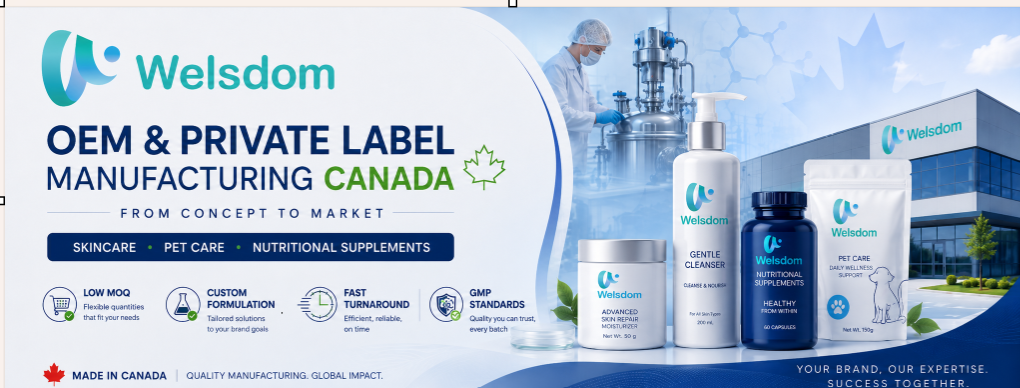
New to private label? Download our free 20-page guide to launching your first product.
When you start sourcing products, you will quickly face a key decision: private label vs OEM. Both let you sell products under your own brand, but they differ in customization, cost, and speed to market. This guide breaks down private label vs OEM so US brands can choose the model that fits their goals.
What Does Private Label Mean?
Private label means you sell an existing, proven product under your own brand and label. The manufacturer already has the formula and production process ready, so you customize the branding and packaging rather than the product itself. This is the fastest, lowest-cost way to launch.
What Does OEM Mean?
OEM, or original equipment manufacturing, means the manufacturer builds a product to your specifications. You can develop a custom formula, unique packaging, and proprietary features. OEM takes more time and investment, but it gives you a truly differentiated product that competitors cannot easily copy.
Private Label vs OEM: Cost and Speed
In the private label vs OEM comparison, private label wins on speed and upfront cost, while OEM wins on differentiation and long-term brand value. Private label products can launch in weeks, while OEM development may take months including testing. Your budget and timeline often decide the answer.
Customization and Control
If owning a unique formula matters to your brand, OEM is the better path. If you want to enter the market quickly and validate demand, private label is ideal. Many brands start with private label and move to OEM once they have proven sales and want to stand out further.
Which Model Is Right for You?
Choose private label if you want speed, lower risk, and a simple launch. Choose OEM if you want a custom, defensible product and are ready to invest in development. The right manufacturer can support both, letting you start with private label and scale into OEM. Explore our OEM and private label manufacturing services to compare options.
Combining Both Approaches
Many growing US brands use a hybrid strategy: private label for fast-moving staples and OEM for hero products that define the brand. Understanding private label vs OEM lets you build a portfolio that balances speed and differentiation. For more on this, see how the FDA treats supplement labeling regardless of model.
Make the Right Choice for Your Brand
There is no single winner in private label vs OEM, only the model that fits your goals, budget, and timeline. The right manufacturing partner helps you decide and grow. Request a quote to find the model that fits your US brand.
Frequently Asked Questions: Private Label vs OEM
One common question in the private label vs OEM decision is which model is cheaper to start. Private label almost always has lower upfront costs because the product already exists, while OEM requires investment in development and testing. For brands on a tight budget, private label is usually the entry point.
Brands also ask whether they can switch models later. Yes, and many do. A typical path is to launch with private label to prove demand, then reinvest profits into an OEM custom formula that differentiates the brand. Understanding private label vs OEM helps you plan this progression from day one.
Finally, founders want to know which model builds more brand value. OEM products, because they are unique, are harder for competitors to copy and can command premium pricing. Private label builds value through branding and customer experience. The strongest brands often use both, matching each model to the right product in their lineup.
It also helps to consider your long-term roadmap. Some brands launch a single hero product, while others plan a full line over time. Knowing your roadmap helps you decide whether to invest in custom development now or start lean and expand later. Whichever path you choose, aligning your manufacturing model with your growth plan keeps your decisions consistent and your budget under control. The most successful brands revisit this choice as they grow, ensuring their production strategy always matches their current stage and ambitions rather than locking themselves into one approach forever.