
New to private label? Download our free 20-page guide to launching your first product.
A private label supplement manufacturing timeline usually runs from about 4 weeks to 24 weeks. A stock formula in basic packaging sits at the short end, at roughly 4 to 8 weeks. A custom formula with custom packaging sits at the long end, at roughly 16 to 24 weeks. A Health Canada product licence, if you need one, adds its own review time.
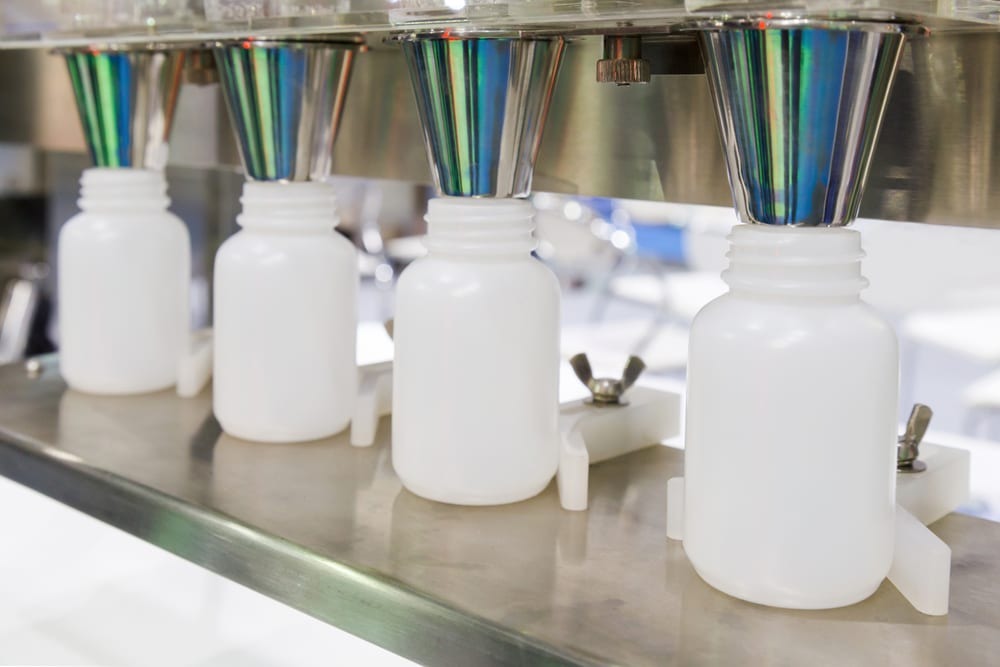
“When can I have stock?” is one of the first questions founders ask. It’s a fair question, because your launch date, ad budget and cash flow all depend on it. The honest answer is that it depends on two choices you make early: whether you use an existing formula, and whether you need custom packaging. This guide breaks the manufacturing timeline into stages, so you can see where the weeks go and how to save some.
The typical manufacturing timeline at a glance
These are the ranges we publish for different project types. Use them as planning ranges, so confirm the dates on your quote.
| Project type | Typical range |
|---|---|
| Stock formula, basic packaging | 4 to 8 weeks |
| Custom formula, existing packaging parts | 10 to 14 weeks |
| Custom formula, custom packaging | 16 to 24 weeks |
Product type matters too. Our startup ranges show collagen powder at 4 to 7 weeks, pet calming chews at 4 to 8 weeks, and functional gummies and skincare creams at 6 to 10 weeks. Gummies take longer because flavour, mould and actives all need to work together.
Stage 1: Brief and quote
Every manufacturing timeline starts with your product brief. A clear brief names the format, serving size, must-have ingredients, claims, quantity, packaging, budget and target market. Then the manufacturer can quote quickly and accurately.
Vague briefs cost time. If the factory has to guess your dose or your bottle size, you’ll go back and forth before the real work starts. Our guide on how to prepare a product brief shows what to include.
Stage 2: Formula and samples
This stage causes the widest swings in any manufacturing timeline.
- Stock formula. If you choose an existing formula, this stage shrinks or disappears. You review a sample, confirm it, and move on.
- Custom formula. Our formulation team writes a proposal with ingredient names, amounts and the reasons for each. Then you receive a physical sample to check taste, texture, colour and solubility. Most projects need 1 to 3 rounds of changes before final approval.
Complex custom formulas take longer. Our custom formulation page puts full development at 12 to 24 weeks for complex projects, depending on testing and regulatory needs. So if your idea needs a new delivery system or an unusual active, plan for the long end.
Stage 3: Packaging and labels (runs alongside Stage 2)
Packaging work should start at the same time as the formula, not after it. That includes the container, the label design and the regulatory copy. In Canada, retail labels also need English and French text.
Stock bottles and pouches with a printed label are fast. However, custom-printed packaging can become the slowest part of the whole manufacturing timeline, because the packaging supplier has its own production queue. If speed matters most, launch in stock packaging and switch to custom packaging on a reorder.
Stage 4: Regulatory approval (varies by product)
Most supplements sold in Canada need a Natural Product Number (NPN) before sale. Health Canada’s published service standards set review targets by application class:
- Class I: 60 calendar days.
- Class II: 90 calendar days.
- Class III: 30 days of screening, then 180 days of assessment.
These are Health Canada’s targets, not promises, so check the current service standards for NHP application reviews before you plan. You can usually run the licence application in parallel with formula and packaging work. Our guide on how to create a natural health product in Canada covers the licence steps.
In the US, dietary supplements don’t need FDA approval before sale, although a new dietary ingredient needs a premarket notification. Still, the label and claims must follow FDA rules, so leave time for a label review.
Stage 5: Production, testing and release
Once the formula and packaging are approved, the run gets a slot on the production schedule. A typical run includes:
- Raw material receipt and checks against each supplier’s certificate of analysis.
- Batch manufacturing with in-process quality checks.
- Finished product testing, such as potency, microbial and heavy metals where required.
- Filling, labelling and final packing.
- Release with a certificate of analysis for the batch.
For pet products, our typical range is 4 to 8 weeks from approved sample to finished inventory. That window covers sourcing, production, testing and packing. So the clock for this stage starts when you sign off the sample, not when you first send the brief.
What slows a manufacturing timeline down
Delays often have little to do with the production line itself. Instead, they tend to come from decisions and parts that arrive late:
- Late changes. Changing a dose after sample approval often means a new sample and new stability work.
- Ingredient lead times. Specialty actives and some botanical extracts can take weeks to arrive.
- Custom packaging. Printed pouches, boxes and unusual bottles add their own queue.
- Label rework. A claim that needs rewriting can hold up printing.
- Slow approvals. Each round that waits a week on your side adds a week to the end date.
How to shorten your manufacturing timeline
You can’t skip testing, but you can remove waiting time. These five habits help most:
- Send a complete brief. It removes a round of questions.
- Start with an existing formula if speed matters more than uniqueness. You can launch a custom version later.
- Use stock packaging for the first run.
- Work on labels while samples are in progress. Don’t wait for the final sample to start design.
- Answer quickly. Fast feedback keeps your slot on the schedule.
Also plan your second run early. A useful rule is to reorder when you have 60 to 90 days of inventory left. That gives the factory time to source, produce and ship before you sell out.
Frequently Asked Questions
How long does private label supplement manufacturing take?
It depends on the formula and packaging. As a guide, a stock formula in basic packaging takes about 4 to 8 weeks. A custom formula with custom packaging takes about 16 to 24 weeks. Confirm the dates for your product on your quote.
What is the fastest way to launch a supplement?
Use an existing formula, stock packaging and a printed label. That keeps your manufacturing timeline near the short end. Then add a custom formula or custom packaging on a later run.
Does an NPN add time to the manufacturing timeline?
It can. Health Canada’s published targets range from 60 days for Class I to 210 days in total for Class III. You can usually run the application in parallel with formula and packaging work.
Why do custom formulas take longer?
A custom formula needs a written proposal, physical samples and usually 1 to 3 rounds of changes. Complex formulas may also need extra testing before production.
When should I reorder?
A useful rule is to reorder when you have 60 to 90 days of stock left. That covers sourcing, production and shipping time.
When you’re ready to put real dates on your launch plan, request a quote on our private label supplements page.